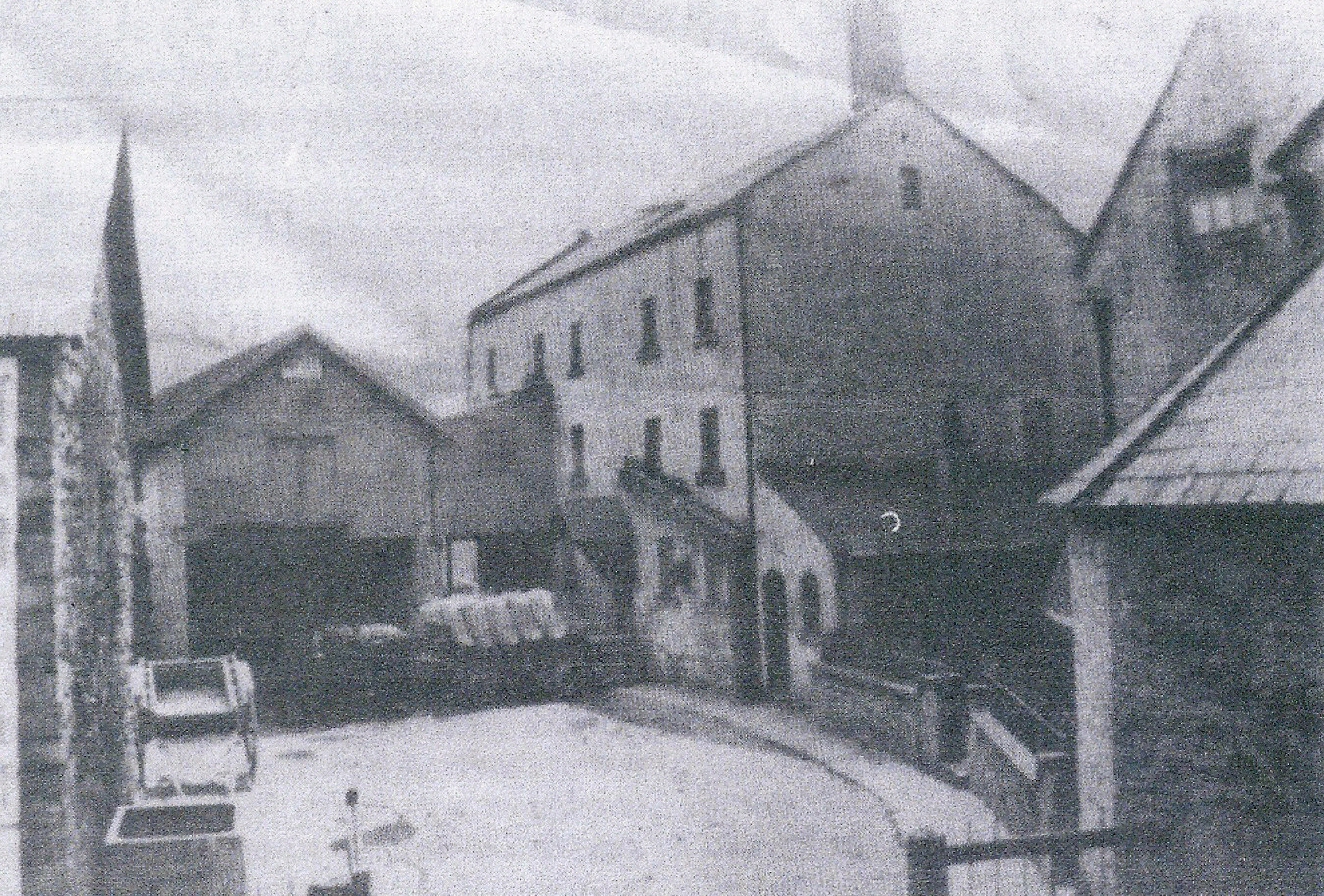
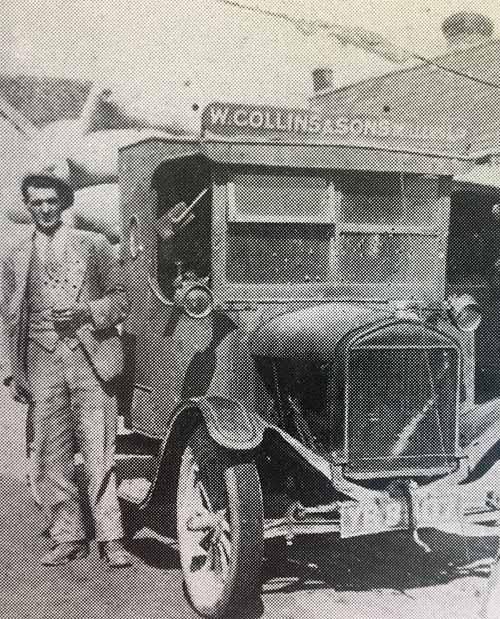
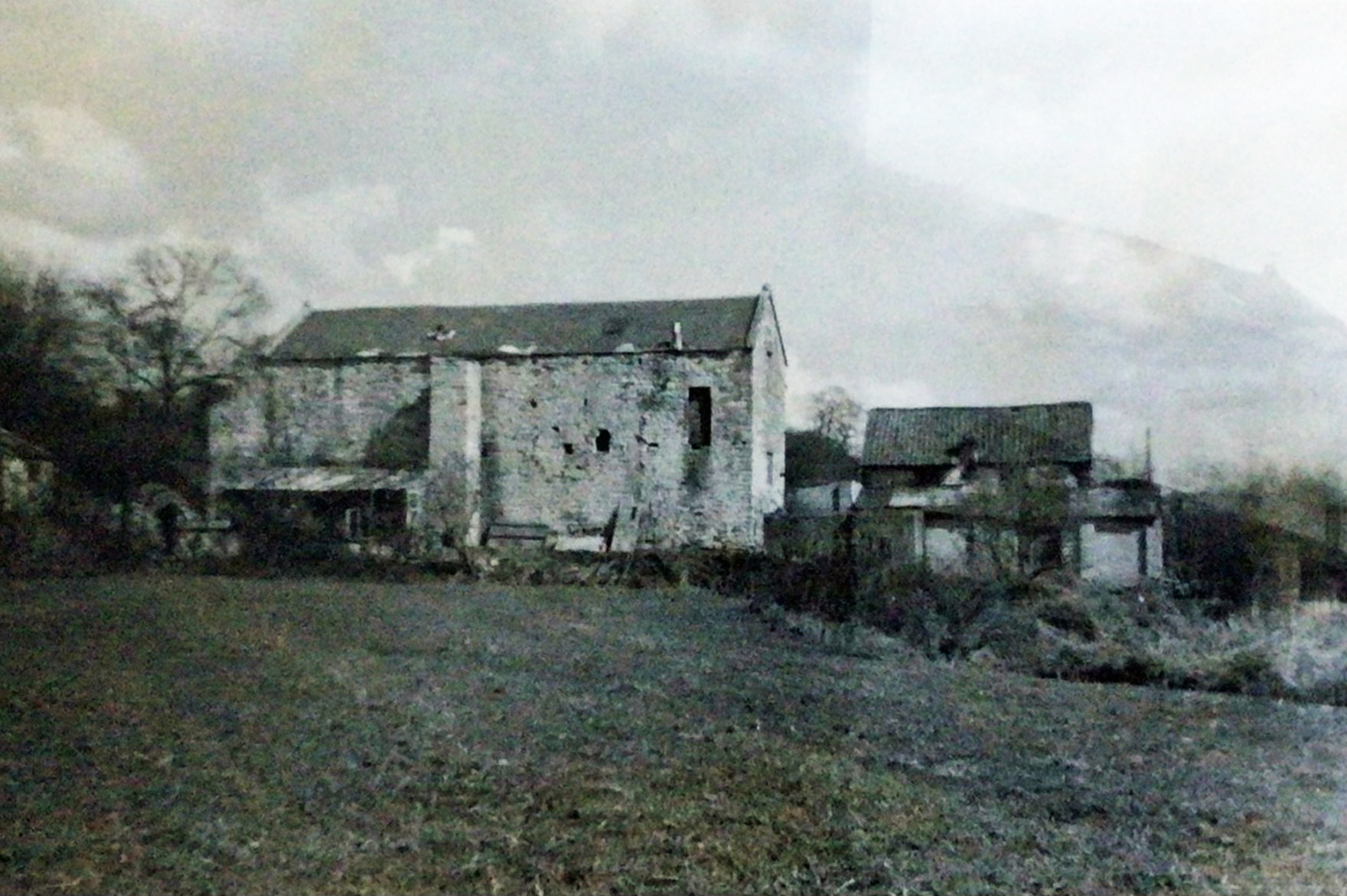
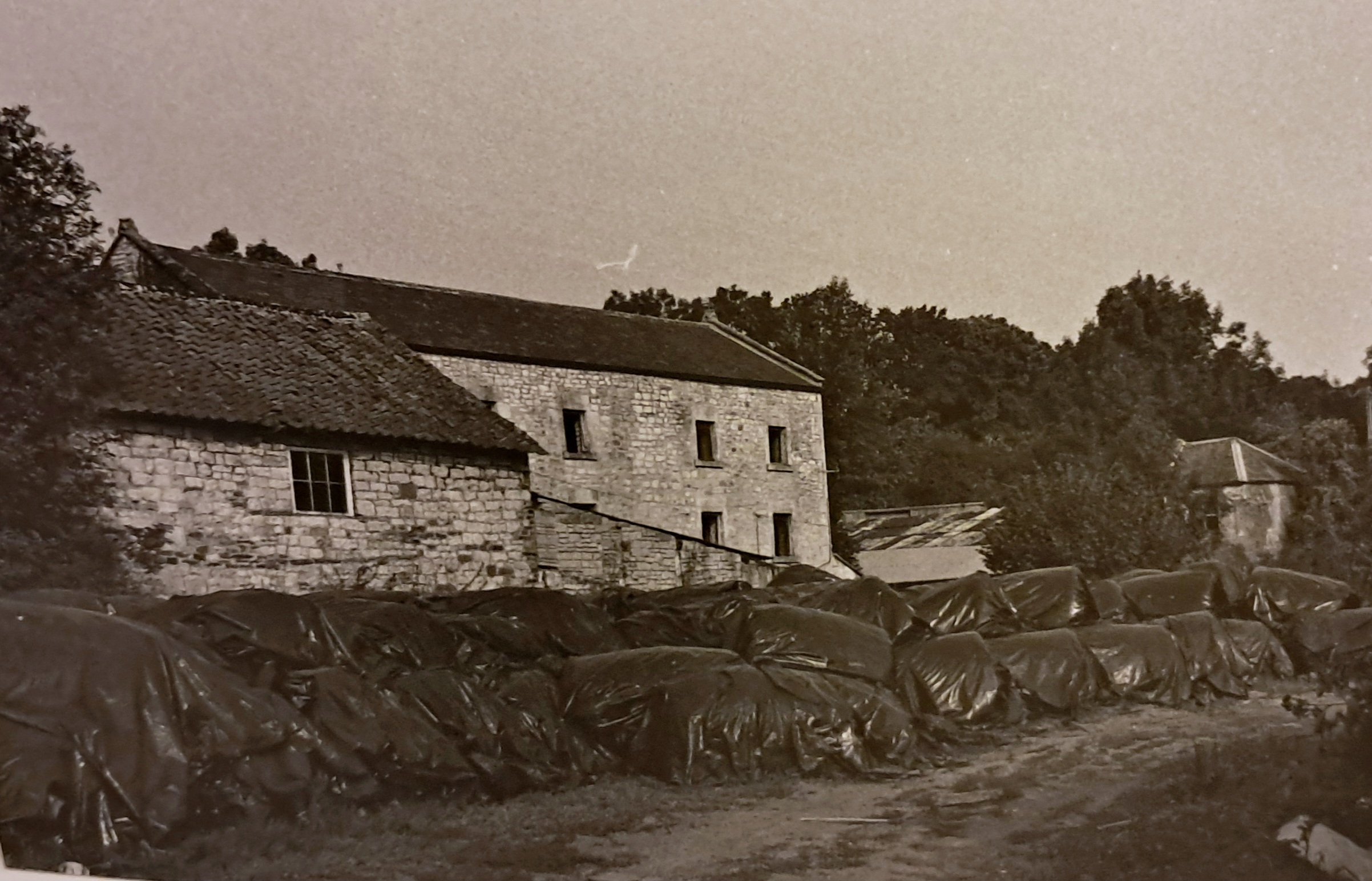
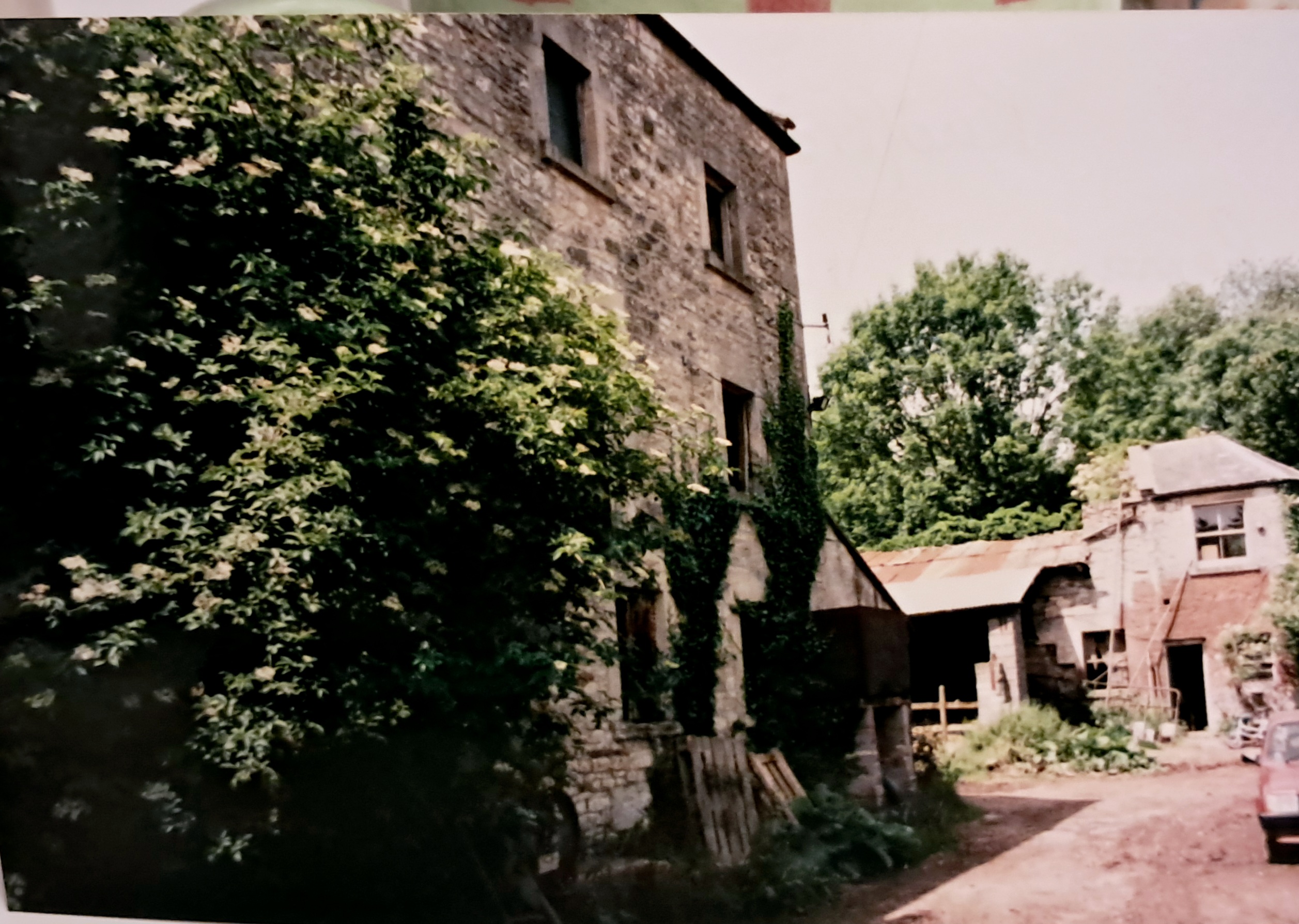
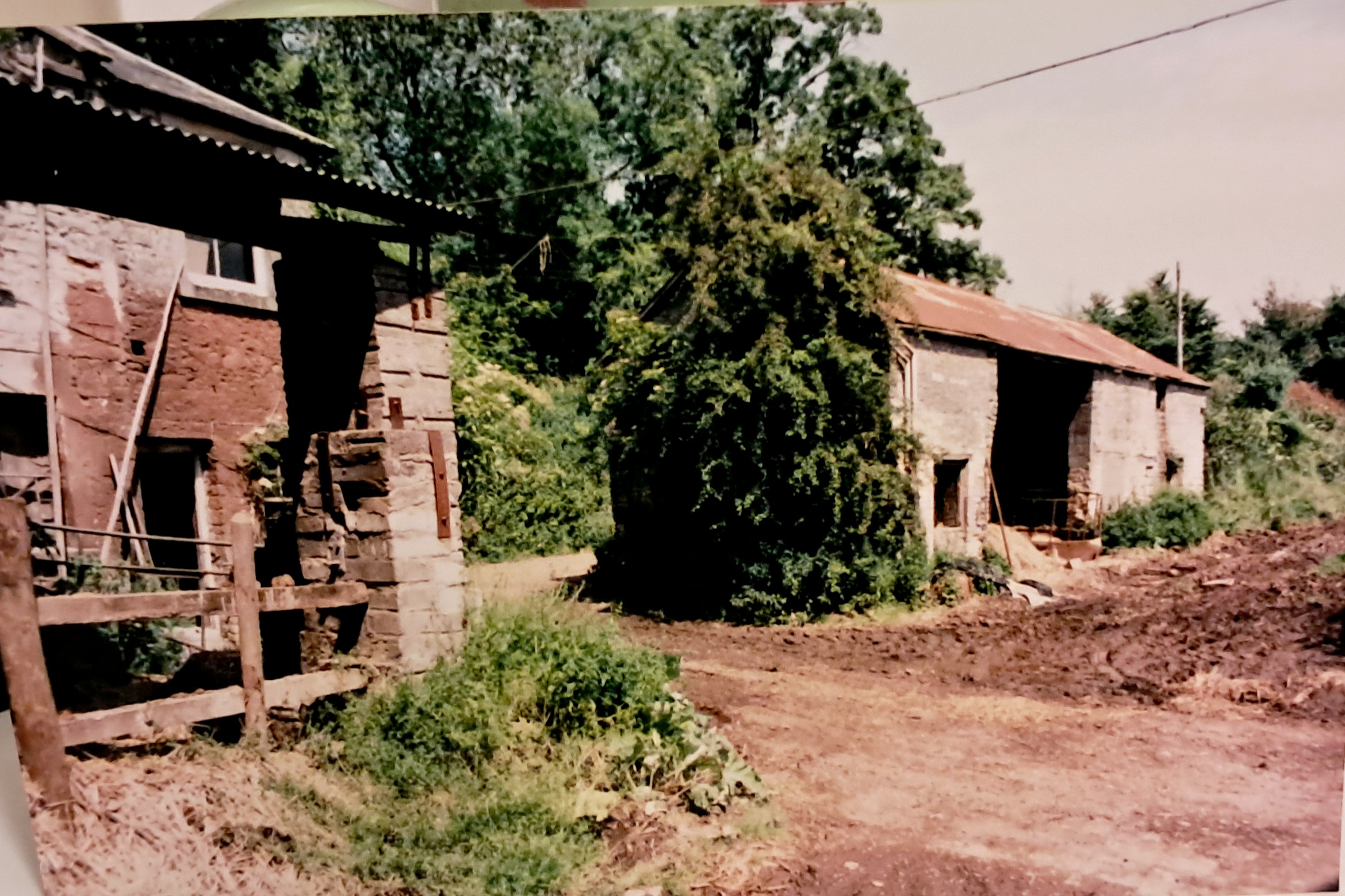
Radford Mill is probably the mill identified in the Domesday Book. In 1784 Estate Map has the mill owned by Richard Biggs. The Land Tax Assessment of 1781 has Richard Biggs as the owner and the occupier is James Collins. Family research indicates that there were Collins’ established in the area as far back as 1511. The mill house was built (or rebuilt) in stone in 1706, but the adjacent water mill had already been in operation by a member of the Collins family, probably as tenants, since 1611. The present mill building is still standing and dates from the mid-seventeenth century.
However, by 1788 there is a conveyance of a messuage (the mill house) and water mill called Radford Mill by James Stephens to James Collins. This is the beginning of a long association of the Collins family as owners of Radford Mill and the subsequent development of an industrial area. James and Sarah Collins had eight children, six boys and two girls. James died in 1792 and Sarah in 1827. The 1838 Tithe Map shows several industrial activities run by by different sons: Radford Mill (William Collins – third son), a Brewery (John Collins – fourth son), a Tan Yard (George Collins -fifth son) and a Candle Factory (Jacob Collins – sixth son). George Collins became so affluent he built South Hill House in approximately 1832. The large house known as Radford Villa, originally called Mill Mead House, was built in the early 19th century, constructed as part of a brewery by John. As the brewing expanded, space was needed for the malt preparation, so the Old Malt House was built in about 1835.
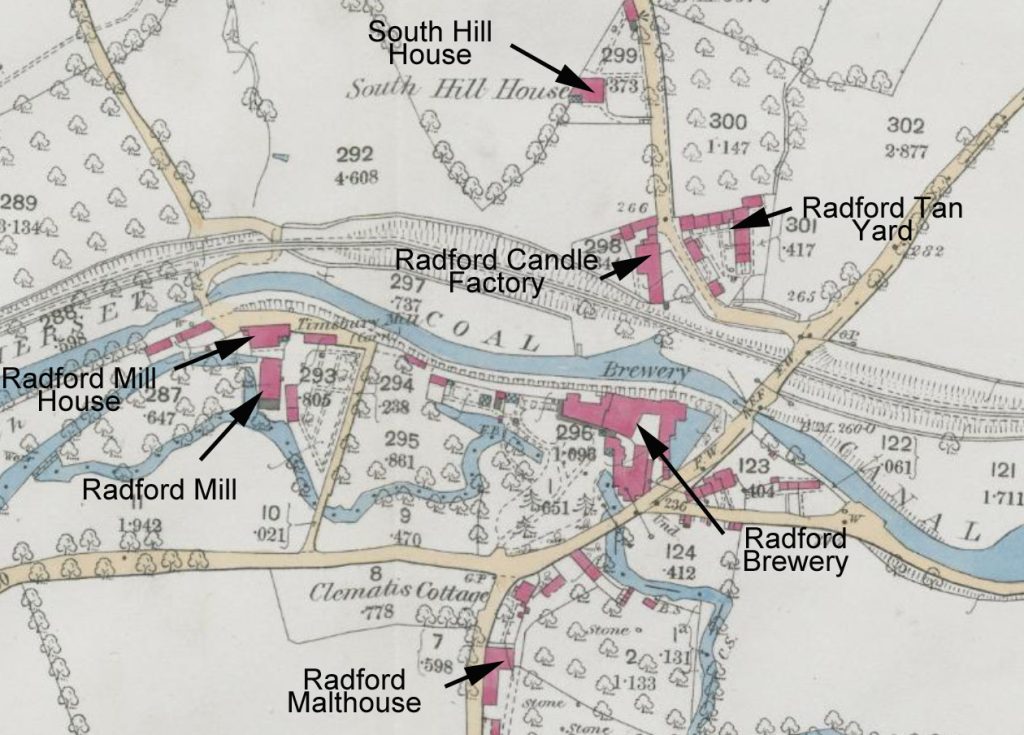
The youngest son, Jacob, made candles for the miners in the local pits. William Jnr managed the Hop Yard and Mill.
The brewery was eventually taken over by relatives of the Collins family – the Rossiters – and Radford Villa was converted into a market garden. The association with the Collins and Rossiter families continued well into the 20th century. Many of the Collins family are buried in St Mary’s Churchyard.